


How to read a side channel blower curve before you buy
A blower's headline flow figure means nothing on its own. Here is how the curve,...
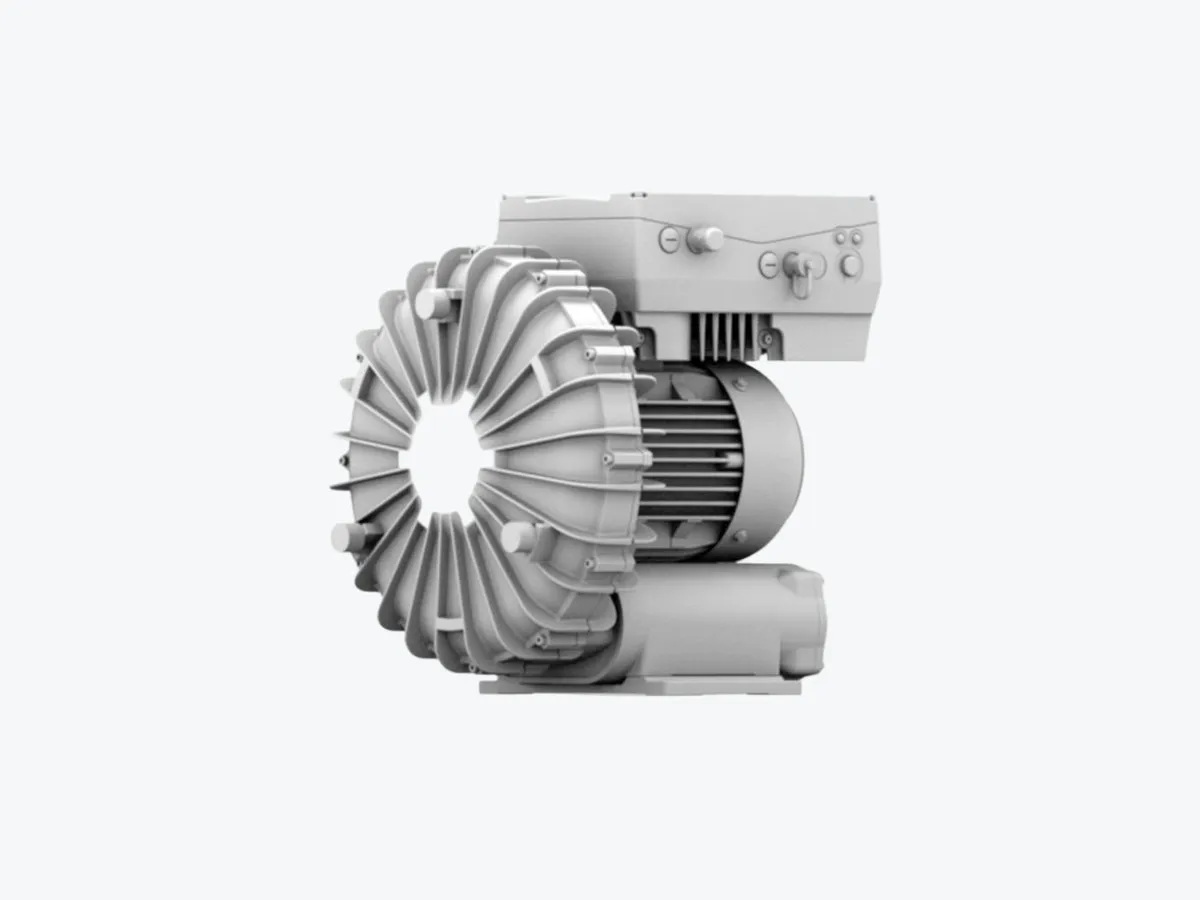
Every side channel blower is sold with a performance curve, and almost every misapplied blower in the field was chosen from the headline number on that curve rather than from the point where it will actually run.
The curve is a map, not a specification
The curve shows what the machine can do across its whole operating range: at zero flow it produces its maximum pressure, and at zero pressure it produces its maximum flow. Neither of those extremes is a useful working point. Real duty sits somewhere between them, and where exactly depends on the system you connect to the blower.
System resistance decides the duty point
Pipe length and diameter, bends, filters, silencers, valves and the height the air has to be lifted all create resistance. Plot that resistance against flow and you get a rising curve. Where your system curve crosses the blower curve is the duty point — that is the flow and pressure the machine will settle at once it is running.
Change any part of the system and the duty point moves. Adding a filter that clogs over time pushes the duty point up the pressure axis and down the flow axis. That is why a machine that performed perfectly on commissioning can feel weak three months later without anything being wrong with the blower itself.
What to send us
- Required flow rate at the working condition, not the free-air figure
- Pressure or vacuum level at that flow
- Pipe diameter and total run, including bends
- Filter type, silencer and any valve in the line
- Media, temperature and altitude of the installation
With those five items we can place your duty point on the curve and tell you whether a given frame will run comfortably, marginally, or outside its useful range.
Why the motor matters as much as the frame
The same impeller housing can be supplied with different motor sizes. A larger motor does not make the blower produce more pressure — it only raises the power ceiling. What it does change is how far up the curve the machine can be pushed before the motor overloads, which matters if your system resistance drifts upward over time.
Rule of thumb: choose the frame from the duty point, then choose the motor from the worst-case resistance you expect over the service interval — usually with a clean filter replaced by a loaded one.
Where this goes wrong in practice
The two most common errors are sizing on free air delivery and ignoring the filter. The first produces a machine that runs far to the right of its intended point and overheats. The second produces a machine that works on day one and underperforms on day ninety. Both are avoidable with a short conversation before the order is placed.